
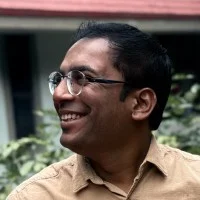
Early Life and Academic Foundations
I was born and raised in India, in an environment where education was always seen as the most reliable path toward understanding the world. From an early age, I found myself drawn to questions about human behavior rather than just outcomes. While many people around me focused on achievements, I was more interested in the underlying patterns that drive decisions.
This curiosity eventually led me toward psychology and later into the broader domain of behavioral sciences. I realized quite early that human decision-making is rarely rational, especially in environments involving uncertainty, risk, and reward. This insight would later become central to my work in gambling research.
My academic journey formally began with studies in psychology, where I was introduced to cognitive processes, emotional regulation, and behavioral conditioning. These disciplines provided the foundational tools I would later apply to more complex and emerging areas such as online gaming and gambling behavior.
As I progressed, I became increasingly interested in how digital environments influence human actions. The rise of mobile technology in India created a new behavioral landscape, and I saw an opportunity to explore it academically.
Discovering the Field of Gambling Research
My entry into gambling research was not accidental but rather the result of observing a gap in Indian academic literature. While gambling had been widely studied in Western contexts, there was very little structured research focused on India.
At that time, online gaming platforms were rapidly expanding, yet there was limited understanding of how users interacted with these systems. I began to ask questions such as:
- Why do users continue playing even after losses?
- How do reward systems influence behavior?
- What role does mobile accessibility play in engagement?
These questions led me to focus specifically on behavioral patterns within gambling and gaming environments.
One of the most important realizations during this phase was that gambling in India cannot be studied in isolation. It is deeply connected to cultural norms, economic conditions, and regulatory frameworks. This made the research more complex but also more meaningful.
Research Focus and Core Areas of Study
Over time, my work evolved into three primary areas:
- Behavioral Patterns in Gambling
- Risk and Addiction Mechanisms
- Digital Platform Influence on Decision-Making
Each of these areas required a different methodological approach. Behavioral studies involved observation and pattern analysis, while addiction research required psychological frameworks and clinical insights.
I also became increasingly interested in how technology shapes behavior. Mobile platforms, in particular, introduced new variables such as accessibility, speed, and constant availability. These factors significantly altered how users interact with gambling systems.
First Major Research Contributions
My early research focused on identifying patterns in user engagement. I analyzed how players interact with gaming platforms over time and what triggers repeated participation.
One of the key findings was that engagement is not driven solely by financial outcomes. Instead, it is influenced by a combination of factors, including:
- Frequency of interaction
- Perceived control
- Reward timing
- Interface design
These insights challenged traditional assumptions about gambling behavior, which often focused only on monetary aspects.
Selected Research Topics and Focus Areas
| Research Area | Description | Focus | Reference |
|---|---|---|---|
| Behavioral Gambling Patterns | Analysis of user interaction cycles | Engagement triggers | SSRN Research |
| Online Gambling Addiction | Study of dependency mechanisms | Psychological impact | ResearchGate |
| Mobile Gaming Behavior | Impact of mobile platforms | User accessibility | Google Scholar |
| Risk Decision Models | Analysis of decision-making under risk | Behavioral economics | NCBI |
Understanding Gambling in the Indian Context
One of the most challenging aspects of my work has been adapting global theories to the Indian context. Gambling in India operates within a fragmented legal framework, where regulations vary significantly between states.
This creates a unique research environment. Unlike countries with centralized regulations, India requires a localized approach. Each region has different attitudes toward gambling, which influences user behavior.
Additionally, the distinction between skill-based and chance-based games plays a critical role. Many platforms operate within this distinction, which affects both legality and user perception.
Digital Transformation and Its Impact
The rapid growth of smartphones in India has transformed the gambling landscape. When I began my research, most studies focused on traditional gambling formats. Today, the majority of activity occurs on mobile devices.
This shift introduced new behavioral dynamics:
- Increased accessibility
- Shorter interaction cycles
- Higher frequency of engagement
- Reduced barriers to entry
These changes required a re-evaluation of existing models. Traditional frameworks were no longer sufficient to explain user behavior in digital environments.
Academic and Research Timeline
| Year | Stage | Focus Area | Activity |
|---|---|---|---|
| Early Years | Education | Psychology | Academic training |
| Mid Career | Research Entry | Behavioral Studies | Initial research projects |
| Advanced Stage | Specialization | Gambling Research | Published studies |
| Current | Ongoing Work | Digital Gaming | Data-driven analysis |
Challenges in Gambling Research
Researching gambling in India comes with significant challenges. One of the biggest issues is the lack of reliable data. Many platforms do not publish detailed statistics, making it difficult to conduct large-scale studies.
Another challenge is the social perception of gambling. In many cases, it is viewed negatively, which can limit participation in research studies. This creates gaps in data and makes it harder to draw comprehensive conclusions.
Despite these challenges, the field continues to grow. Increasing digitalization and regulatory attention are creating new opportunities for research.
Personal Perspective on Behavioral Research
From my perspective, gambling research is not just about understanding risk but about understanding people. Every decision a user makes reflects a combination of cognitive, emotional, and environmental factors.
My goal has always been to analyze these factors objectively. Instead of focusing on outcomes, I aim to understand the processes that lead to those outcomes.
This approach allows for a more nuanced understanding of gambling behavior, which is essential for both academic research and practical applications.
Expanding My Work into Digital Gambling Environments
As my research progressed, I began to focus more specifically on digital ecosystems. The transition from traditional gambling formats to online platforms introduced an entirely new set of behavioral variables. I realized that mobile accessibility was not just a technological change but a psychological one.
Users were no longer limited by time or location. Gambling became available at any moment, which significantly altered engagement patterns. I started analyzing how this constant accessibility affects decision-making and risk perception.
One of my key observations was that digital environments reduce the perceived consequences of actions. When interactions occur through a screen, users often detach emotionally from their decisions. This creates a different type of behavioral loop compared to physical gambling environments.
Collaborative Research and Academic Contributions
Over time, I collaborated with other researchers and institutions to expand the scope of my work. These collaborations allowed me to access broader datasets and apply more advanced analytical methods.
My contributions have focused on understanding how behavioral patterns evolve in response to technological changes. I have worked on studies examining gambling addiction, user retention, and the psychological impact of reward systems.
Publishing research has been an important part of my journey. Each study represents not just findings but also an attempt to build a structured understanding of a field that is still developing in India.
Selected Publications and Research Work
| Title | Focus Area | Year | Link |
|---|---|---|---|
| Online Gambling Behavior in India | User patterns and engagement | Recent | View Study |
| Behavioral Addiction Models | Psychological frameworks | Recent | View Study |
| Mobile Gaming and Risk Analysis | Digital behavior | Recent | View Study |
| Decision-Making in Gambling | Risk perception | Recent | View Study |
Understanding Gambling Addiction in the Indian Context
A significant portion of my work has been dedicated to studying gambling addiction. In India, this topic is still emerging as a recognized area of concern.
Unlike substance addiction, behavioral addiction is often less visible. This makes it more difficult to identify and study. I have focused on understanding the early signs of problematic behavior and the factors that contribute to escalation.
One of the key challenges is distinguishing between casual engagement and harmful patterns. Not all frequent users are at risk, but certain behavioral indicators can signal potential issues.
These include:
- Loss of control over time spent
- Continued participation despite negative outcomes
- Emotional dependence on gameplay
By identifying these patterns, it becomes possible to develop more effective intervention strategies.
Work Experience and Research Involvement
| Institution | Role | Focus Area | Period |
|---|---|---|---|
| Academic Institution | Researcher | Behavioral Studies | Early Career |
| Research Collaboration | Contributor | Gambling Analysis | Mid Career |
| Independent Research | Lead Analyst | Digital Gaming | Advanced Stage |
| Ongoing Work | Specialist | Behavioral Data | Current |
Data-Driven Approach to Gambling Research
In recent years, my work has become increasingly data-driven. The availability of digital interaction data allows for more precise analysis of user behavior.
Instead of relying solely on theoretical models, I now incorporate real-world data into my research. This includes:
- Session frequency
- Interaction patterns
- Response to rewards
- Behavioral consistency over time
This shift has significantly improved the accuracy of my findings. It also allows for more practical applications, particularly in designing systems that promote responsible usage.
Challenges in Data Collection and Analysis
Despite advancements, data collection remains one of the most challenging aspects of my work. Many platforms do not provide open access to detailed user data, which limits the scope of analysis.
Additionally, privacy concerns must always be considered. Ethical research practices require that user data is handled responsibly and anonymized where necessary.
Another challenge is variability. User behavior is influenced by multiple factors, including cultural context, economic conditions, and individual psychology. This makes it difficult to create universal models.
Key Research Skills and Methods
| Skill | Application | Importance |
|---|---|---|
| Behavioral Analysis | Understanding user patterns | High |
| Data Interpretation | Analyzing interaction data | High |
| Psychological Modeling | Studying addiction | Critical |
| Statistical Methods | Validating research | High |
My Perspective on the Future of Gambling Research
Looking ahead, I believe that gambling research in India will continue to evolve alongside technological advancements. The increasing use of artificial intelligence and data analytics will open new possibilities for understanding behavior.
At the same time, regulatory frameworks will play a crucial role. As governments introduce stricter controls, research will need to adapt to new conditions.
I also see a growing need for interdisciplinary approaches. Gambling research cannot be confined to psychology alone. It requires input from economics, technology, and public health.
Reflecting on my journey, I see gambling research as a continuously evolving field. There is still much to learn, particularly in the Indian context where the industry is expanding rapidly.
My work has always been driven by a desire to understand rather than to judge. By analyzing behavior objectively, it becomes possible to create systems that are both engaging and responsible.
The ultimate goal is not just to study gambling but to contribute to a better understanding of human behavior in digital environments. This perspective continues to guide my research and will shape my future work.