

How Cashback Bonus Offers Should Be Understood
A cashback bonus can look calmer and more practical than other promotional offers because it is usually presented as a partial return after unsuccessful play. For Indian players, that wording can feel reassuring, but it should still be read carefully. Cashback does not remove risk, does not guarantee profit, and does not turn losses into a safe outcome. It is a conditional feature that depends on rules, timing, eligibility, and platform calculations.
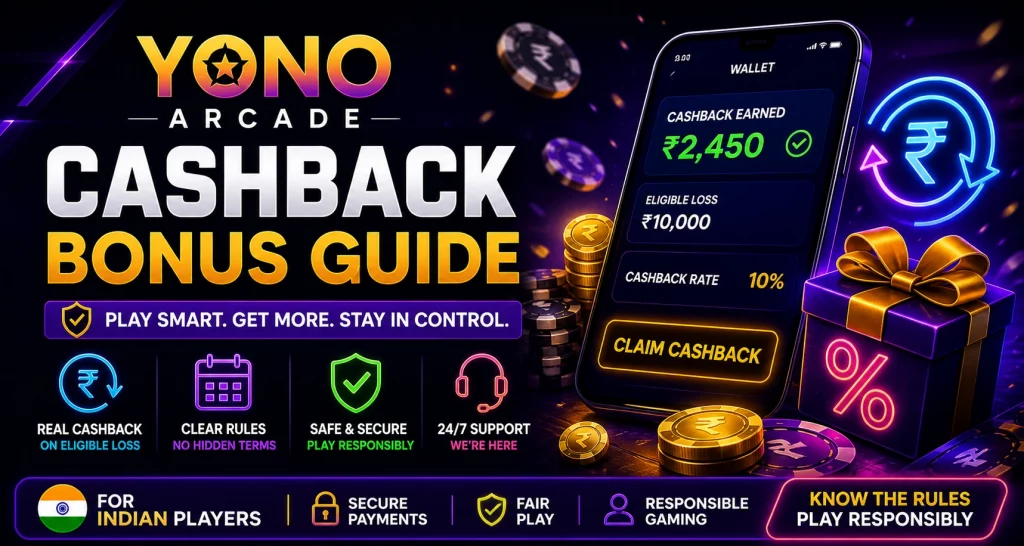
On Yono Arcade, a responsible cashback page should explain the difference between a visible cashback percentage and the real value a user may receive. A headline such as “10% cashback” may not mean that every rupee spent is returned directly. The offer may apply only to net losses, selected activity, a fixed time window, or a capped amount. Some cashback may be issued as restricted funds rather than withdrawable money.
The safest way to read a cashback offer is to start from the conditions instead of the percentage. The user should check when the cashback is calculated, whether it is automatic or manual, whether it has wagering rules, whether it expires, and whether it can be withdrawn. If any of these points are unclear, the offer should not be treated as useful.
Why Cashback Can Be Misleading
Cashback sounds protective, but the psychology behind it can be risky. A user may feel that losses are less serious because part of the amount might return later. This can encourage longer sessions or additional deposits. A responsible article should directly explain that cashback is not a safety net. It is only a limited promotional condition.
This is especially important in India, where mobile-first access and fast digital payments can make decisions feel quick and casual. If cashback encourages a user to spend more than planned, then the offer is no longer helping. The correct approach is to set a budget first and then decide whether the offer fits that budget.
The word Bonus should be understood as a condition, not as a promise. A cashback offer can be useful only when the user already understands the limits and remains in control.
| Cashback Check | What It Means | Safer Reading | Risk Signal |
|---|---|---|---|
| Percentage | The visible cashback rate shown in the offer. | The rate is explained with a clear example. | Large percentage with no calculation method. |
| Calculation Window | The time period used to calculate eligible loss or activity. | Daily, weekly, or event-based timing is stated clearly. | The user cannot tell when cashback is counted. |
| Cashback Form | Whether cashback is real balance, restricted funds, or promo credit. | The balance type is visible before activation. | Cashback looks withdrawable but becomes restricted later. |
| Maximum Cap | The highest amount a user can receive from the offer. | The cap is shown near the percentage. | The percentage is promoted while the cap is hidden. |
| Responsible Awareness | External health and behavioural awareness can help users assess risk. | NIMHANS can be used as a public health reference. | No safety information or support direction appears. |
What Indian Players Should Check First
Before any cashback offer is considered, the user should check whether the platform explains the difference between gross loss and net loss. Gross loss may refer to the total lost amount, while net loss may account for wins, bonuses, refunds, or excluded activity. This difference matters because cashback is often calculated on net loss, not on every transaction.
The second point is timing. A user should know whether cashback is calculated instantly, daily, weekly, or after a campaign ends. If the timing is unclear, the user may expect a return that does not arrive when expected.
The third point is account access. A cashback feature may appear after Login, but that does not mean it should be activated automatically. The user should still read every condition before accepting anything linked to spending or gameplay.
What Indian Players Should Check First
Before any cashback offer is considered, the user should check whether the platform explains the difference between gross loss and net loss. Gross loss may refer to the total lost amount, while net loss may account for wins, bonuses, refunds, or excluded activity. This difference matters because cashback is often calculated on net loss, not on every transaction.
The second point is timing. A user should know whether cashback is calculated instantly, daily, weekly, or after a campaign ends. If the timing is unclear, the user may expect a return that does not arrive when expected.
The third point is account access. A cashback feature may appear after Login, but that does not mean it should be activated automatically. The user should still read every condition before accepting anything linked to spending or gameplay.
A Safer Way to Read Cashback Offers
A responsible cashback guide should teach users to read from the bottom upward. Instead of starting with the main percentage, they should start with the smallest text: caps, exclusions, expiry, eligible sections, withdrawal rules, and support terms. This is where the real value of the offer usually becomes visible.
If the offer remains clear after those checks, it is easier to understand. If it becomes more confusing, it should be avoided. The user should never feel forced to continue only because the offer looks limited or because a timer is displayed.
Cashback should also be separated from recovery thinking. A user should not return to play only to “get something back.” That mindset can create a cycle where the offer keeps the user engaged longer than planned. A safer page should explain that cashback is not a reason to chase previous outcomes.
Why Transparency Is Better Than Big Claims
A cashback page for Yono Arcade should avoid exaggerated promises. Strong content does not need phrases such as “guaranteed return” or “risk-free play.” Those phrases are misleading because every real-money gaming activity carries uncertainty.
Better wording focuses on clarity. A user should know what cashback means, how it is calculated, when it appears, and what can stop it from being useful. This gives the page more trust and makes the content more responsible for Indian readers.
Why Eligibility Matters More Than the Headline
A cashback offer can look simple on the surface, but eligibility decides whether the user can actually benefit from it. The displayed percentage is only one part of the offer. The more important question is whether the user qualifies, which activity counts, how the loss is calculated, and whether the returned amount can be used freely.
For Yono Arcade, this section should explain cashback as a rule-based feature rather than a reward that automatically helps every player. A user may see a cashback message and assume it applies to all account activity, but that is not always true. Some offers apply only to selected time periods, selected payment methods, selected platform sections, or selected user groups.
A safer reading starts with a basic question: “Would I still use this platform in the same way if cashback did not exist?” If the answer is no, the offer may already be influencing behaviour too strongly. Cashback should never become the reason to spend more, extend a session, or return only to recover previous losses.
Clear Cashback Conditions
This side shows the signals that make cashback easier to understand before the user relies on it.
- Defined period: the offer states whether cashback is daily, weekly, or campaign-based.
- Visible cap: the maximum return amount is shown near the cashback percentage.
- Balance type: the page explains whether cashback is cash, promo balance, or restricted credit.
- Calculation example: the user can see how net loss and return amount are counted.
- Support route: help information is visible if the cashback is not credited correctly.
Cashback Warning Signals
This side shows conditions that should make the user pause or skip the offer completely.
- No calculation method: the page shows only a percentage without explaining how it works.
- Hidden expiry: the user sees cashback after activation but not before.
- Unclear exclusions: selected sections are excluded without a visible list.
- Pressure wording: the offer pushes urgent deposits or longer sessions.
- Unsafe source: cashback is promoted through unofficial pages or private messages.
External awareness reference: NCPG India
Popular Bonus Types Indian Players Often See
Indian players may come across different promotional formats across online arcade and gaming platforms. This list should be used as an informational section, not as encouragement to claim offers. The purpose is to help users understand common wording before they make account decisions.
Welcome offers are usually connected with account creation. They may appear during Sign up, but the conditions can include deposit rules, identity checks, expiry limits, and withdrawal restrictions.
Cashback offers return a limited percentage of qualifying loss or activity. They may sound protective, but users should check whether the return is withdrawable, capped, or restricted.
Reload offers are usually aimed at returning users. They can become risky when they encourage repeated deposits after previous sessions.
Referral rewards are linked to inviting another user. These need careful reading because the reward may depend on the invited person depositing, playing, or completing verification.
Free trial credits may appear safer because they do not always require payment, but they may still include expiry, restricted use, or no-withdrawal conditions.
Tournament-linked offers may provide points, entries, or limited rewards. These can increase time spent on the platform, so session control matters.
Loyalty rewards may be based on repeated activity. Users should avoid treating loyalty systems as a reason to spend more than planned.
Why Cashback Should Not Shape Spending
Cashback becomes risky when it changes how much a user is willing to spend. If someone deposits more because they expect part of it back, the promotion has started controlling the decision. A safer approach is to set the spending limit first and then treat cashback as secondary.
This is important because cashback can soften the emotional impact of loss. The user may think, “I will receive something back later,” and continue longer than planned. Responsible content should make clear that partial return does not cancel the original loss.
For Indian users, payment speed adds another layer. Fast deposits can make repeated decisions feel small, but the total amount can grow quickly. A cashback offer should never replace basic budget control.
How to Read Net Loss Rules
Many cashback offers are based on net loss rather than total amount spent. This means the platform may subtract wins, bonus funds, voided activity, refunds, or excluded sections before calculating the return. A user who does not understand this can easily expect more cashback than they receive.
A transparent offer should show a calculation example. For example, if a user spends a certain amount, wins back part of it, and ends the period with a smaller net loss, cashback should be calculated from the net loss if that is what the terms state. Without an example, the offer is harder to judge.
The page should also explain whether cashback is automatic or needs manual claiming. Automatic cashback can still have restrictions, while manual cashback may require action before expiry. Neither type should be trusted without clear terms.
Cashback and Game Section Restrictions
Some cashback offers apply only to selected sections of a platform. A user may assume that Games activity counts in full, but the offer may exclude certain categories, promotional rounds, demo modes, tournament entries, or restricted play areas. This is why section rules should be checked before the user spends time or money.
A responsible page should explain these limits plainly. If cashback applies only to a specific section, that should be visible near the offer itself. If the page hides restrictions in separate terms, the user may misunderstand the real value.
This also matters for tracking. If activity is not counted toward cashback, the user may not know until the calculation period ends. Clear tracking information reduces disputes and avoids false expectations.
Account Safety During Cashback Claims
Cashback claims should happen through the official platform account area only. Users should not send OTPs, passwords, payment screenshots, or identity details through unknown contacts just because someone promises cashback support.
If a cashback issue appears, the safer route is official support. The user should keep personal records, such as the offer terms, date, and visible account status, but should avoid sharing sensitive information outside verified channels.
A cashback offer that requires unofficial contact should be treated as unsafe. No promotion is worth losing account access or exposing private payment data.
Why Cashback Timing Changes the Real Value
Cashback is not only about the percentage shown on the page. Timing is just as important. A user needs to know when the cashback period starts, when it ends, when the calculation happens, and when the returned amount appears in the account. If the timing is unclear, the offer becomes difficult to judge.
For Yono Arcade, this part of the page should explain cashback as a timed condition. A daily cashback offer works differently from a weekly cashback offer. A campaign-based cashback offer may depend on selected dates, specific activity, or manual claiming after the period ends. The user should not assume that cashback appears instantly unless the terms clearly say so.
This also matters for responsible play. If a user keeps returning only to “wait for cashback” or “recover something later,” the offer may encourage unhealthy behaviour. Cashback should remain secondary to personal limits, not become a reason to continue.
Read the Cashback Period
Check whether the offer is daily, weekly, event-based, or linked to a specific campaign window before making any decision.
Check Eligible Activity
Confirm which sections count toward cashback and which areas are excluded from the calculation.
Review the Balance Type
Find out whether the returned amount becomes withdrawable balance, restricted credit, or promotional funds with extra conditions.
Confirm Responsible Limits
Cashback should never be used as a reason to extend a session, increase deposits, or chase previous losses.
Use Official Support Only
If cashback is missing or delayed, use official support channels and avoid sharing OTPs, passwords, or payment screenshots with unknown contacts.
Why Tracking Should Be Visible
Cashback tracking should not feel mysterious. A user should be able to understand what has counted, what has not counted, and when the cashback amount will be reviewed. If tracking is hidden, the user may continue activity based on assumptions rather than facts.
For Yono Arcade, visible tracking can make the page more trustworthy. It allows users to see whether the offer is working as described. A clear account section should show dates, eligible activity, calculation status, and final cashback value. Without this, disputes become more likely.
This is also where Slots restrictions can matter. Some cashback campaigns may include or exclude certain play sections, and the user should not assume that every category contributes equally. The terms should explain this before the session starts.
Why Cashback Should Not Become a Recovery Tool
Cashback becomes dangerous when a user treats it as a way to recover losses. A partial return does not erase the original spend. It only returns a limited amount under specific conditions. If the user keeps playing because cashback might arrive later, the promotion has started shaping behaviour in the wrong direction.
A responsible guide should explain this directly. Cashback should be considered only after a user has already set limits. It should never be the reason for another deposit, another session, or a longer attempt to reverse previous outcomes.
The safest mindset is simple: cashback may reduce the impact of a qualifying period, but it does not make play safer by itself. Safety comes from limits, clear rules, and the ability to stop.
Mobile Access and Cashback Terms
Indian users often interact with arcade-style platforms through mobile screens. This makes term visibility especially important. On a phone, cashback conditions may be hidden behind small tabs, expandable sections, or short labels. A user should not rely only on the first visible line of the offer.
This also applies to Apk searches and app-related access. Users should be cautious with external downloads or unofficial files that claim to unlock better cashback. A promotional offer is not worth installing unknown software, exposing account details, or weakening device security.
A safer page should tell users to confirm cashback terms inside the official platform environment. If the offer exists only on a third-party page, social message, or unofficial file source, it should be treated as unreliable.
How to Keep Control During Cashback Campaigns
Control starts with deciding the maximum amount of time and money before the cashback campaign begins. The user should not let the offer define the budget. Once the limit is reached, the correct action is to stop, even if cashback has not yet been credited or calculated.
Users should also avoid checking cashback status repeatedly during a session. Constant checking can create emotional attachment to the offer. A better method is to review the terms once, set a limit, and return only to confirm the final result after the calculation period.
For Yono Arcade, this kind of wording makes the page more credible. It shows that the platform content is not trying to create pressure. Instead, it gives users a practical framework for understanding cashback without treating it as a guaranteed benefit.
Why the Final Review Matters
A cashback bonus should not be activated only because it looks helpful. The final decision should come after the user understands the calculation method, the return type, the time window, the cap, the excluded sections, and the withdrawal conditions. If any part of that chain is unclear, the offer is not ready for safe use.
For Yono Arcade, the final section should give Indian users a practical way to review cashback without pressure. The page should not frame cashback as recovery, protection, or guaranteed value. It should frame cashback as a limited promotional rule that may reduce part of qualifying activity under specific conditions.
A user should be able to stop before activation. That is important. A responsible cashback page is useful even when the user decides not to claim anything.
Read the Full Cashback Terms
Start with the rules, not the percentage. The user should know exactly how cashback is calculated before relying on it.
- Check calculation period and eligible activity.
- Confirm cap, expiry, and balance type.
- Avoid offers that hide wagering or withdrawal limits.
Keep the Budget Separate
Cashback should never define how much a user spends. The personal limit must come first.
- Set a fixed time and money limit.
- Stop when the limit is reached.
- Avoid increasing activity to qualify for a return.
Review the Credited Amount
The user should compare the credited amount with the published terms instead of guessing why the number changed.
- Compare net loss, excluded sections, and cap.
- Save visible terms and campaign dates for reference.
- Avoid unofficial support contacts.
Use Official Help Channels
Cashback questions should be handled through verified account support, not private chats or unknown pages.
- Use official support inside the platform.
- Protect OTPs, passwords, and payment details.
- Reference RBI for payment-awareness context.
Final Checks Before Claiming Cashback
Before claiming cashback, the user should confirm that the offer appears in the official account area, that the time window is visible, and that the platform explains whether cashback is credited automatically or manually. The user should also check whether the returned amount has its own conditions.
This is where the page can mention FAQ naturally. A strong FAQ section should answer practical questions about calculation, expiry, withdrawal, account eligibility, and support. It should not only repeat promotional claims.
The same applies to Links. A verified links section should help users reach official pages safely, not push them toward unofficial mirrors, private groups, or unverified download sources.
Why Cashback Should Stay Secondary
Cashback is secondary because the original spending decision matters more than the possible return. A user should never continue because “some amount will come back.” That logic can lead to longer sessions and weaker budget control.
A safer approach is to decide the limit first, treat cashback as optional, and stop when the limit is reached. If cashback appears later, it should be reviewed calmly. If it does not appear, the user should use official support and avoid repeated activity.
Account Protection and Personal Data
No cashback campaign should require users to share private account information with unknown contacts. OTPs, passwords, payment screenshots, ID files, and wallet details should not be sent through unofficial channels.
This point is especially important for Indian mobile users because promotions are often shared through social platforms, messages, and third-party pages. A cashback offer is not safe if it depends on external pressure, unknown files, or private claims.
Final Editorial Note for Yono Arcade
A responsible cashback bonus page should help users understand the offer before they act. It should explain that cashback has limits, calculation rules, expiry periods, and possible restrictions. It should also remind users that cashback does not remove risk and should never be used as a recovery strategy.
The strongest version of this page gives the reader permission to skip the offer. That builds trust. A user who understands when not to claim cashback is better protected than a user who only sees the percentage.
FAQ
Cashback Bonus Questions
What is a cashback bonus on Yono Arcade?
A cashback bonus is a conditional offer that may return part of qualifying activity after a specific period. It should be checked through the official platform area and read together with the full terms.
Does cashback mean I get all my money back?
No. Cashback usually returns only a limited percentage of eligible net loss or selected activity. It may also include caps, expiry dates, wagering rules, or restricted balance conditions.
What should Indian players check before using cashback?
Indian players should check the cashback percentage, calculation window, maximum cap, eligible sections, balance type, withdrawal rules, and support options before relying on the offer.
Can cashback be withdrawn immediately?
Not always. Some cashback may be credited as promotional balance or restricted funds. The user should confirm whether the cashback is withdrawable before activation.
Why is net loss important in cashback offers?
Net loss usually means the final qualifying loss after wins, excluded activity, refunds, or other adjustments are counted. Cashback may be calculated from this amount rather than from total spending.
Is cashback safe if it comes from private groups?
Cashback offers from private chats, screenshots, unofficial pages, or unknown download sources should be treated carefully. A safer offer should appear inside the official account area with full terms.
Can cashback encourage risky behaviour?
Yes. Cashback can become risky if it makes a user spend more, extend sessions, or chase previous losses. It should never replace personal limits or responsible play decisions.
What should I do if cashback is not credited?
The safest step is to contact official platform support and check the published terms. Users should not share OTPs, passwords, payment screenshots, or private account data with unknown contacts.






Comments