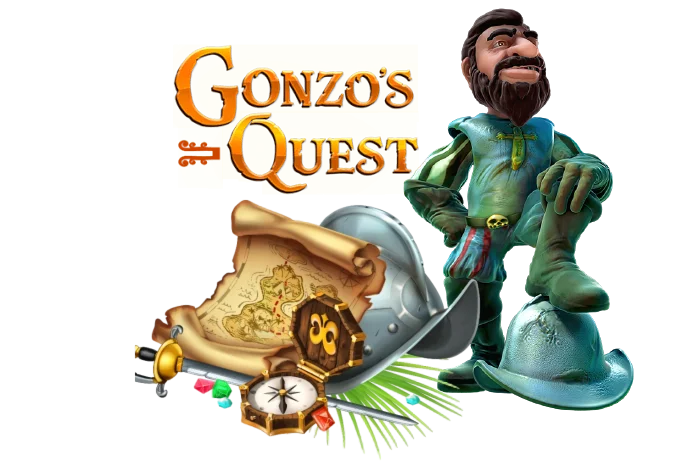
Gonzo’s Quest Entry and First Interaction
When I began testing Gonzo’s Quest inside Yono Games, the first noticeable difference compared to traditional slots was the absence of spinning reels. The game introduces a cascade system from the very first interaction, which immediately changes how players perceive gameplay.
The Sign up process connects directly to gameplay access, allowing users to start interacting with the system without delay. There is no separation between account creation and game exposure.
This design removes hesitation and pushes users directly into action.
Transition From Access to Gameplay
After Login, the system presents Gonzo’s Quest as a featured experience. Unlike classic slots, the game uses falling symbols instead of spinning reels, which creates a different type of engagement.
The platform emphasizes:
- immediate cascade activation
- visual continuity
- uninterrupted gameplay flow
This creates a faster onboarding process where players begin interacting almost instantly.

Interactive Table of Gonzo’s Quest Entry Mechanics
| Entry Phase | User Action | System Response | Reference |
|---|---|---|---|
| Account Creation | Register | Immediate access | RBI |
| Platform Access | Enter system | Game highlighted | MeitY |
| Game Launch | Open Gonzo’s Quest | Instant load | Gaming India |
| First Action | Start play | Cascade triggered | SEBI |
Structural Role of Gonzo’s Quest
Gonzo’s Quest stands out because it replaces spinning mechanics with a gravity-based system. Symbols fall into place, and winning combinations disappear, allowing new ones to drop in.
This structure enables:
- continuous gameplay cycles
- multiple wins from a single action
- increased engagement per interaction
The system shifts from single outcomes to chained interactions.
Engagement Distribution Graph
Bonus Integration Through Avalanche System
The Bonus mechanic in Gonzo’s Quest is directly tied to the avalanche system. Instead of triggering a separate feature, rewards increase through consecutive cascades.
Each successful cascade increases the multiplier:
- first cascade → base multiplier
- second cascade → increased multiplier
- third cascade → higher multiplier
This creates a layered reward system within a single action cycle.
Gonzo’s Quest Inside Games Ecosystem
Within the broader Games structure, Gonzo’s Quest serves as a more advanced alternative to traditional slots. It introduces variability without overwhelming the player.
Its role includes:
- increasing engagement depth
- introducing cascading mechanics
- providing dynamic gameplay cycles
The system uses it to diversify user interaction.
Behavioral Foundation of Cascade Gameplay
At its core, the game operates on a loop:
- symbols fall
- matches occur
- symbols disappear
- new symbols drop
This loop continues until no new matches are formed.
The system benefits from:
- extended interaction chains
- reduced downtime
- continuous feedback
This creates a more immersive experience compared to standard slots.
Popular Slots for Players in India
Alongside Gonzo’s Quest, Indian players frequently engage with other high-performing slot titles that offer strong interaction loops.
Examples include:
- Starburst
- Sweet Bonanza
- Gates of Olympus
- Big Bass Bonanza
- Book of Dead
- Reactoonz
These titles complement Gonzo’s Quest by offering different volatility levels and gameplay mechanics.
Structural Interpretation of Entry Phase
At this stage, Gonzo’s Quest functions as a transition from simple slots to more dynamic systems. It introduces cascading mechanics while maintaining accessibility.
The system uses it to:
- deepen engagement
- increase session complexity
- sustain interaction
This forms the foundation for more advanced gameplay behavior.
Avalanche Mechanics and Multiplier Behavior
As I continued testing Gonzo’s Quest inside Yono Games, the most defining element became the avalanche system. Unlike traditional reels, every spin creates a chain reaction where symbols fall, disappear, and are replaced continuously.
This system changes the structure of interaction. Instead of one result per spin, a single action can produce multiple outcomes. The gameplay becomes layered rather than linear.
The core loop is:
- symbols land
- winning combination forms
- symbols collapse
- new symbols fall
This repeats until no further matches occur.
Progressive Multiplier System
The multiplier is directly tied to the avalanche chain. Each consecutive cascade increases the multiplier value, which amplifies potential rewards within the same cycle.
Typical progression:
- first avalanche → base payout
- second avalanche → 2x multiplier
- third avalanche → 3x multiplier
- fourth and beyond → higher scaling
This structure creates short bursts of high engagement within a single interaction.
The system does not rely on rare bonus rounds. It builds intensity through repetition.
Interactive Table of Avalanche and Multiplier Behavior
Impact on Player Decision Flow
The avalanche system reduces the number of decisions players need to make. Once a spin is initiated, the system continues generating outcomes automatically.
This leads to:
- reduced user input
- increased focus on results
- uninterrupted gameplay
Players are not choosing actions repeatedly. They are observing sequences unfold.
Role of Visual Feedback and Motion
Visual feedback plays a central role in maintaining engagement. Each cascade is accompanied by motion and animation that reinforces the sense of progress.
This includes:
- falling symbols
- disappearing blocks
- multiplier indicators
These elements create a continuous sense of activity even within a single spin.
Multi-Channel Access and Interaction
Gonzo’s Quest is frequently accessed through mobile-first environments, including Apk installations. This influences how players interact with the game.
Effects include:
- shorter but more frequent sessions
- faster transitions between spins
- increased responsiveness to visual cues
The system adapts well to mobile interaction patterns.
System Interpretation of Avalanche Phase
At this stage, Gonzo’s Quest can be understood as a dynamic interaction system. It transforms each spin into a sequence rather than a single event.
The loop becomes:
- spin initiated
- cascade begins
- multiplier increases
- sequence ends
This loop repeats continuously, creating a stable engagement model.
Structural Continuity of Gameplay
The avalanche and multiplier systems work together to maintain continuity. There are no abrupt transitions or separate phases. Everything happens within a single flow.
This design ensures:
- consistent interaction
- predictable structure
- continuous engagement
The system relies on repetition rather than complexity.
Player Behavior Patterns and Session Flow
At this stage, Gonzo’s Quest shifts from being a mechanical system to a behavioral environment. Inside Yono Games, the avalanche mechanic begins to shape how players act rather than just how the game runs.
What becomes clear is that players stop thinking in terms of single spins. Instead, they begin to anticipate chains. Each action is no longer isolated. It is part of a potential sequence.
This changes behavior significantly.
Micro-Cycle Interaction Structure
The gameplay is divided into micro-cycles that occur within a single spin. These cycles are not controlled by the player once initiated.
Each micro-cycle consists of:
- cascade activation
- multiplier increase
- symbol drop
- continuation or stop
This structure creates a layered interaction model where one input produces multiple results.
Players are not repeating actions. The system is repeating outcomes.
Interactive Table of Player Behavior Dynamics
Decision-Making Shift
One of the most important changes introduced by Gonzo’s Quest is how it alters decision-making. The player is no longer deciding after every outcome. Instead, decisions are delayed until the full cascade cycle is complete.
This leads to:
- fewer interruptions
- deeper engagement per action
- increased focus on sequences rather than outcomes
The system reduces decision frequency while increasing interaction depth.
Integration Into Slots Ecosystem
Within the broader Slots category, Gonzo’s Quest acts as a bridge between simple and advanced mechanics. It introduces cascading logic while maintaining accessibility.
Its role includes:
- increasing engagement complexity
- extending interaction cycles
- maintaining user interest
The system uses it to diversify gameplay patterns without overwhelming users.
Influence on Session Duration
Because each spin can produce multiple cascades, session duration naturally increases. Players spend more time per action, which reduces the need for frequent input.
This results in:
- longer sessions
- higher engagement density
- reduced perception of time
The system benefits from extended interaction chains.
External Navigation and Access
Players frequently return to Gonzo’s Quest through multiple entry paths categorized as Links, which allows them to resume gameplay without friction.
This improves:
- accessibility
- continuity
- user retention
The system remains consistent regardless of entry method.
Structural Interpretation of Behavior Phase
At this stage, the system can be described as a loop:
- action initiates cascade
- cascade produces sequence
- sequence reinforces engagement
This loop repeats continuously.
There is no clear separation between gameplay and behavior. They function as a unified system.
Practical Insight From Player Perspective
From a practical perspective, understanding how cascades behave is more important than focusing on individual wins. The system operates through patterns of interaction rather than isolated outcomes.
Key observations include:
- frequency of cascades
- multiplier progression
- duration of sequences
These indicators provide a clearer understanding of gameplay behavior.
Integrated System Perspective
Gonzo’s Quest functions as a dynamic engagement system. It combines mechanics, behavior, and feedback into a continuous loop.
The player is not simply playing a slot. The player is interacting with a structured system designed to sustain activity through chained interactions.
Payout Structure and Cascade Outcome Distribution
At the final stage, Gonzo’s Quest reveals how outcomes are structured across chained interactions rather than isolated spins. Inside Yono Games, payouts are not concentrated in single events. They are distributed across cascades within one action cycle.
This creates a layered perception of winning. A single spin can produce multiple small or medium outcomes instead of one large result. The system shifts focus from peak wins to cumulative sequences.
The effect is continuity. Players experience progression instead of interruption.
Outcome Flow Across Avalanche Cycles
Each cascade contributes to the total result of a spin. The multiplier increases with every successful chain, which amplifies the cumulative payout rather than generating isolated spikes.
The structure follows:
- initial match sets base payout
- consecutive cascades increase multiplier
- final cascade determines total outcome
This ensures that value is built progressively rather than instantly.
Interactive Table of Payout and Cascade Dynamics
| Cycle Stage | Trigger Condition | System Behavior | Player Outcome |
|---|---|---|---|
| Initial Hit | First match | Cascade starts | Base reward |
| Chain Expansion | Second cascade | Multiplier grows | Increased payout |
| Extended Chain | Multiple cascades | Continuous drops | High cumulative value |
| Cycle End | No further matches | Reset state | Final result applied |
Risk Distribution and Volatility Profile
Despite its dynamic appearance, Gonzo’s Quest operates within a structured probability model. The cascade system creates variability, but outcomes remain statistically controlled.
Key characteristics include:
- medium volatility profile
- balanced distribution of wins and losses
- reliance on sequence length rather than single events
This means that extended cascades are less frequent, but when they occur, they define the session outcome.
System Behavior Near Session End
As sessions progress, the system does not introduce new mechanics. It continues delivering cascades under the same rules. There are no artificial spikes or forced endings.
This creates:
- consistent gameplay experience
- predictable structure
- uninterrupted interaction
The system relies on stability rather than sudden changes.
Interaction Between Gameplay and Retention
Gonzo’s Quest supports retention through its chained interaction model. Players remain engaged because each spin has the potential to evolve into a longer sequence.
This is achieved through:
- cascading mechanics
- multiplier progression
- continuous visual feedback
The system keeps attention focused on potential continuation rather than final results.
External Access and System Continuity
Players often return through multiple access points categorized under Links, allowing them to re-enter gameplay quickly. This ensures that interaction is not limited to a single pathway.
This improves:
- accessibility
- continuity
- long-term engagement
The system remains stable across different entry methods.
Structural Summary of Gonzo’s Quest System
At the final stage, the structure of Gonzo’s Quest becomes clear:
- action triggers cascade
- cascade creates sequence
- sequence builds value
- cycle ends and resets
This loop repeats continuously, forming the core of the gameplay system.
Practical Interpretation
From a practical perspective, the most effective way to approach Gonzo’s Quest is to understand how cascades behave over time rather than focusing on individual outcomes.
Important observations include:
- frequency of cascade chains
- multiplier progression patterns
- duration of sequences
These factors define the overall experience.
System Perspective
Gonzo’s Quest functions as a dynamic engagement model rather than a traditional slot. Its cascading structure transforms each action into a sequence, increasing interaction depth and maintaining continuous activity.
The player is not simply spinning reels. The player is interacting with a system designed to extend engagement through chained outcomes.
FAG
What is Gonzo’s Quest and how does it work?
Gonzo’s Quest is a slot game that uses an avalanche system instead of traditional reels, where symbols fall and create chain reactions for multiple wins in one spin.
What is the avalanche feature?
The avalanche feature removes winning symbols and replaces them with new ones, allowing consecutive wins from a single spin.
How do multipliers work in Gonzo’s Quest?
Each consecutive cascade increases the multiplier, which boosts the total payout within a single sequence.
Can I play Gonzo’s Quest on mobile?
Yes, the game is optimized for mobile devices and can also be accessed through Apk versions for smooth performance.
Does Gonzo’s Quest have free spins?
Yes, landing scatter symbols can trigger a free spins feature with increased multipliers for higher potential rewards.
Is Gonzo’s Quest a high volatility game?
It is considered medium volatility, offering a balance between frequent wins and larger payout potential through cascades.
Are results in Gonzo’s Quest predictable?
No, outcomes are random and based on probability, so each spin is independent from previous results.
How do I access the game quickly?
You can open the game immediately after Login or through direct Links provided on the platform.
What makes Gonzo’s Quest different from other slots?
Its cascade mechanic and progressive multipliers create continuous gameplay sequences instead of single-spin outcomes.
What is the best way to play Gonzo’s Quest?
Focus on understanding cascade behavior, manage your balance, and observe how multipliers build over consecutive wins.






Comments